
AI & Technology for CFOs
Every vendor promises transformation. Most boards hear "we need a system upgrade" and reach for the chequebook or the brake pedal. Neither response is right. The real question is not "should we invest in technology?" — it is "what is the cost of not investing, and how do we measure the return when we do?"
Steven Taylor MBA, CPA — author of 5 books on AI in finance, speaker on technology ROI, and the fractional CFO who helps organisations implement, govern, and extract real value from technology investments. Not theory. Not hype. Frameworks that work.
The Question Most Organisations Get Wrong
Boards ask "what will this technology cost?" when they should be asking "what is the cost of not investing?" Fragmented systems, duplicated processes, manual workarounds — these are not inconveniences. They are compounding liabilities.
Fragmented Systems
Staff re-entering data across disconnected platforms. Every manual handoff is an error waiting to happen and a cost nobody is counting.
Unquantified Risk
System outages, data breaches, compliance failures — harder to count than efficiency gains, but no less real. The SOCI framework has made this a board-level accountability.
Delayed Decisions
When reporting takes days instead of minutes, decisions are made on stale data. In a reforming sector, delay is not neutral — it is a decision to retain friction.
Where Technology ROI Actually Appears
Most business cases only measure efficiency. That is one dimension out of three. Real ROI appears across efficiency gains, risk reduction, and outcome improvement. Measure all three.
Efficiency Gains
- Eliminate duplicated data entry across systems
- Automate manual reporting that takes days
- Recover productive time lost to information hunting
- Reduce overtime from process inefficiency
Risk Reduction
- Strengthen compliance under SOCI framework
- Reduce exposure to data breaches and outages
- Improve cyber discipline and governance
- Protect board from regulatory accountability gaps
Outcome Improvement
- Enable proactive rather than reactive care monitoring
- Connect clinical and financial performance data
- Support evidence-based decision-making at scale
- Move from retrospective reporting to predictive insight
A Practical CFO-Style Framework
Four questions that immediately sharpen any technology or infrastructure business case.
Current State Cost
What cost or inefficiency exists today that this project addresses?
Operational Gains
What measurable improvements will the project create?
Risk Reduction
What risks will it reduce, prevent, or contain?
Care & Quality
What resident or client outcomes will it improve or protect?
Answer those four questions well, and you are no longer talking about IT spend — you are talking about strategic investment in better care and a stronger business.
How I Help Organisations With Technology
Technology Business Cases
Build board-ready business cases that frame technology as strategic investment, not IT expense. Quantify efficiency, risk, and outcome ROI.
Data Foundation Audits
Assess your data quality, architecture, and governance before deploying AI. The Three-Pass Method for cleaning financial data and building audit-grade lineage.
AI Readiness Assessments
Evaluate where your finance function stands on AI capability. Practical competency models and skills gap analysis — not a vendor pitch.
Finance Team Upskilling
Build AI literacy across your finance team without disrupting operations. From controllers to FP&A analysts — practical capability, not theoretical certification.
AI Governance & Risk
Establish verification frameworks, close controls for AI-assisted environments, and governance structures that protect against AI hallucinations and errors.
Technology ROI Measurement
Go beyond FTE reduction. Measure efficiency gains, risk avoided, and quality protected. Build dashboards that show the board real return on technology investment.
5 Books on AI in Finance
Not one book — five. Covering everything from building the data foundation to scaling AI programmes, governing risk, and leading the AI transformation across your entire finance function.
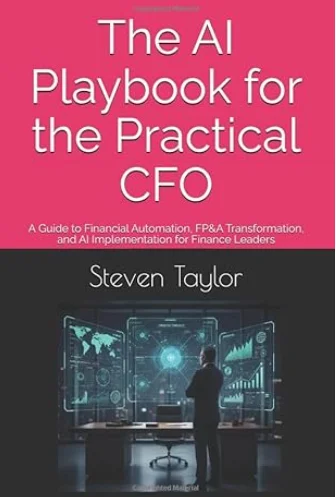
The AI Playbook for the Practical CFO
Demystify AI and harness its power for financial leadership. This practical playbook shows CFOs how to evaluate AI opportunities, implement AI solutions safely, manage risks, and drive genuine business value without getting caught up in the hype.
View on Amazon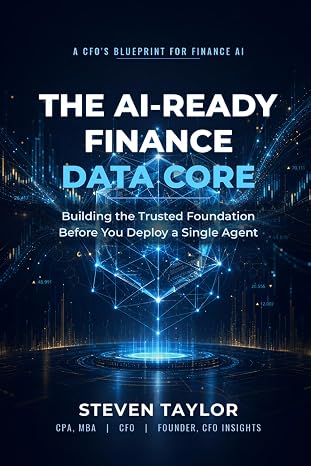
The AI-Ready Finance Data Core: Building the Trusted Foundation Before You Deploy a Single Agent
The book that refuses to skip the foundation. Only 10% of CFOs fully trust their organisation's financial data, yet 67% say data infrastructure is the single biggest barrier to AI deployment. Written by a CFO for finance leaders, this practical playbook covers diagnosing data quality, the Three-Pass Method for cleaning data, building semantic layers and audit-grade lineage, and deploying your first AI use case with confidence.
View on Amazon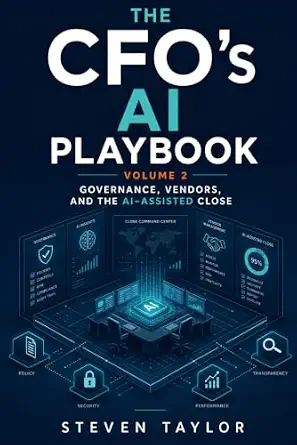
The AI Playbook for the Practical CFO: Volume 2
Year one of AI adoption is about proving it works. Year two is harder. This volume guides CFOs who have started the AI journey through scaling what works, building an AI-capable finance team, governing risk when the CFO is accountable but the AI model is not, choosing the right vendors, and measuring real ROI beyond the pilot phase.
View on Amazon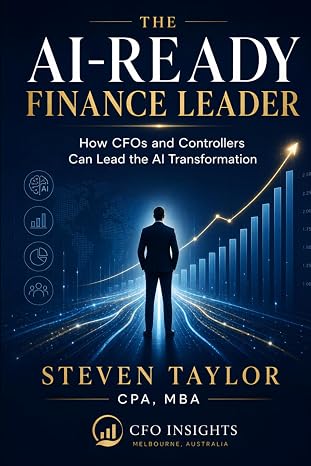
The AI-Ready Finance Leader: How CFOs and Controllers Can Lead the AI Transformation
Written for CFOs, controllers, and FP&A leaders who want a clear, honest account of how AI is transforming the finance function. Covers every major area from FP&A and reporting to treasury, audit, and tax. Includes the AI-First skillset, a self-assessment framework, and practical competency models for building AI capability across the finance team.
View on Amazon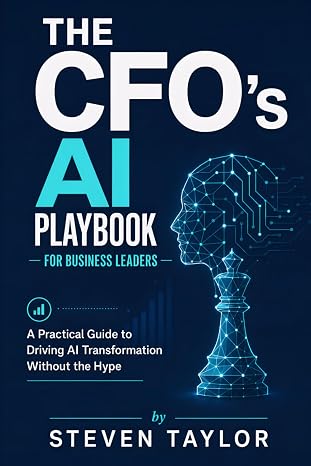
The CFO's AI Playbook: A Practical Guide to Driving AI Transformation Without the Hype
Written by a CFO who had to defend every AI dollar to a board and deliver real results, not slideware. Distils a multi-year AI transformation journey into a clear, practical roadmap any senior executive can use. Covers separating signal from hype, building defensible AI business cases, designing pilots that produce hard evidence, and governing an AI portfolio with stage-gate funding.
View on AmazonSpeaking & Thought Leadership
Building the Business Case: ROI on Technology and Infrastructure
Practical framework presented to aged care leaders on how to build board-ready technology business cases. Covers the three dimensions of ROI, the four-question framework, and real $500K investment examples with measurable payback.
View all speaking engagementsAI's Hallucinations: A CPA's Warning
Featured on MAProfits with Craig Keegan, discussing the real risks of AI hallucinations in financial decision-making — why blind trust in AI-generated financial data could cost millions, and the verification frameworks every CFO needs.
View all speaking engagementsAI & Technology Articles
AI in Aged Care Finance: A Practical Guide for CEOs Who Don't Have a CFO
AI tools are transforming aged care finance — but only for providers who know how to use them. This practical guide shows CEOs without a CFO exactly where AI delivers ROI and how to start in 90 days.
Overcoming the Fears of AI Implementation: A Comprehensive Guide
Practical guidance for CFOs navigating the challenges and opportunities of AI implementation in finance functions.
Safeguarding Sensitive Information: Navigating Data Security and Privacy Challenges in the Age of Cyber Threats
Essential strategies for CFOs to protect sensitive financial data in an increasingly complex cyber threat landscape.
AI & Technology FAQs
Do I need an AI strategy before I fix my data?
How do I build a business case for technology investment that the board will approve?
What does AI readiness actually mean for a finance team?
How do I measure ROI on AI and technology investments?
Is AI safe to use in financial decision-making?
The cost of waiting is not zero.
30 minutes. Tell me where your technology investment stands — what has been approved, what is stuck, what the board is pushing back on. I will tell you how to frame the business case, what the real ROI looks like, and whether I can help.
No slide deck. No pitch. No pressure.
Book a Discovery Call